

Estimated reading time: 6 minutes
The main pain for companies today is not to create a brand, but to keep it coherent and alive through hundreds of digital channels. The fragmentation of audiences and the demand for ultra-fast content cause human teams to become saturated, making mistakes that dilute corporate identity.
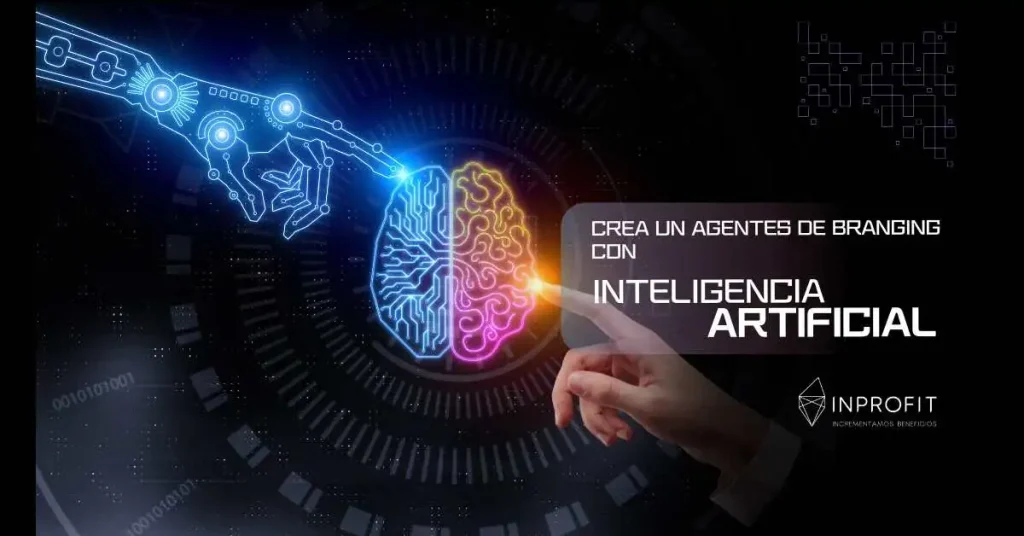
The ultimate solution is AI agent branding services. These intelligent entities not only generate ideas, but act as your 24/7 brand guardians and strategists. In this comprehensive guide, we explain how this technology is redefining brand building, how language models (LLMs) interact with your corporate manual and why it’s the quantum leap you need to make.
What are branding services with an AI Agent?
AI agent branding services consist of the strategic and operational delegation of brand management tasks to advanced artificial intelligence systems. Unlike using simple generative tools (such as asking Midjourney for a logo), an agent is an autonomous system trained specifically with your company’s DNA.
This AI agent knows your value proposition, your customer archetypes, your exact corporate colors (hexadecimal) and, most importantly, your conversational tone of voice.
From Theory to Execution: How a Brand Agent Works
For an AI agent to function as a true Brand Manager, an initial expert configuration is required. Marketers and developers connect models such as GPT-4 Turbo or Claude 4.6 with internal databases (RAG – Retrieval-Augmented Generation).
The process follows these fundamental steps:
- Corporate data ingestion: The agent “reads” your brand manual, campaign history and manifest.
- Definition of parameters (Guardrails): Strict limits are set on what the brand would never say or do.
- Proactive execution: The agent can audit social media copy, generate design proposals or respond to reputation crises in minutes.
The key entities: LLMs, Automation and Omnichannel Consistency.
In the 360 marketing ecosystem, success depends on connecting technology entities. An AI agent does not work in isolation. It integrates via webhooks or APIs with no-code automation platforms such as Make or no-code automation platforms such as Make or n8n (vital tools in today’s web development).
This means that when you publish a new service on your website, the AI agent can detect the change, write press releases tailored to your pitch, generate prompts for images and schedule social media posts. All while ensuring flawless omnichannel consistency.
Main benefits of integrating AI into your corporate identity
Adopting an AI-driven approach does not mean replacing human creativity, but enhancing it. Art directors and copywriters now have a “co-pilot” that eliminates mechanical work.
The adoption data in 2026 is clear: the return on investment (ROI) in brand consulting services accelerates dramatically when implementing these technologies.
Customization at hyper-segmented scale
The modern consumer demands to be spoken directly to. Branding is no longer “one size fits all”.
- Cultural adaptation: The AI agent adjusts the tone of the brand depending on whether the user is in Spain, Portugal or the United States, without losing the essence.
- Micro-segmentation: Allows you to create variations of the same visual and textual campaign for different buyer personas in record time.
Real-time brand and reputation auditing
According to recent HubSpot 2026 digital reputation studies, 65% of brand crises start with misaligned responses in customer service channels.
An artificial intelligence agent constantly monitors mentions, market sentiment and content published by your own team, issuing alerts if a text or image deviates from the Brand Book.
Comparison Chart: Traditional vs. AI-driven Branding (2026)
| Feature | Traditional Branding | Branding with AI Agent |
| Brand Manual | Static (PDF), prone to become obsolete. | Dynamic, integrated into the LLM workflow. |
| Speed of execution | Days or weeks to adapt campaigns. | Minutes to iterate and scale content. |
| Visual audit | Manual, requires constant human review. | Automated. The agent detects misapplied logos or incorrect shades. |
| E-E-A-T scalability | Limited to the capacity of the editorial team. | High. AI cross-references sources of authority to generate expert content quickly. |
Use cases: Practical applications in the digital ecosystem 2026
The most innovative agencies, such as Inprofit, are already implementing these services in real environments. What does this look like in practice?
- Evolutionary Web Redesign: By integrating AI agents into the web development, the site can subtly adapt its key messages or colors based on the time of day or visitor profile, while maintaining the umbrella identity.
- Intelligent Paid Media: The creation of hundreds of ad variations (massive A/B testing) where the agent generates copys that scrupulously respect the psychological angles of the brand.
- Video Marketing Generation: Agents that create structured scripts, select corporate music and generate synthetic voiceovers with the “official voice” of the company.
Conclusion: Lead the market with Smart Branding
AI-agentbranding services are no longer science fiction but the most important competitive advantage of 2026. By automating consistency, personalizing at scale and auditing in real time, your brand will be poised to lead in any channel.
Is your corporate identity manual ready to be “read” and executed by an Artificial Intelligence?
If you want to take the leap into the marketing of the future, discover our automation consulting or contact Inprofit to design your next Brand Agent today.
FAQs about Branding with Artificial Intelligence
No. The AI agent takes on operational, repetitive and verification tasks. High-level strategy, human empathy and critical decision making remain the territory of marketing experts and strategists.
Yes, as long as secure architecture is used. In 2026, professional services configure agents in private enterprise environments, ensuring that your data is not used to train public models without your consent.
With proper consulting and a solid branding manual, the initial deployment (setup) of an IA agent usually takes between 2 to 4 weeks, including the testing phase and setting of “guardrails” (security limits).
Generally, agent frameworks (such as AutoGPT, LangChain or native OpenAI/Anthropic tools) connected to automation platforms (such as Make or n8n) and digital asset management (DAM) systems are used.
Positively, if done with an E-E-A-T approach. A well-trained agent allows you to publish highly relevant, well-structured and semantically rich content at a higher speed, capturing the attention of both Google SGE and LLM discovery engines.

Marketing tecnológico en vena. Fanático de las tecnologías Martech que rompen moldes: IA generativa, blockchain, no-code, metaverso, automatización extrema… Convencido de que el futuro no se espera, se construye (y se vende muy bien).
Responsable del marketing más disruptivo y tecnológico.